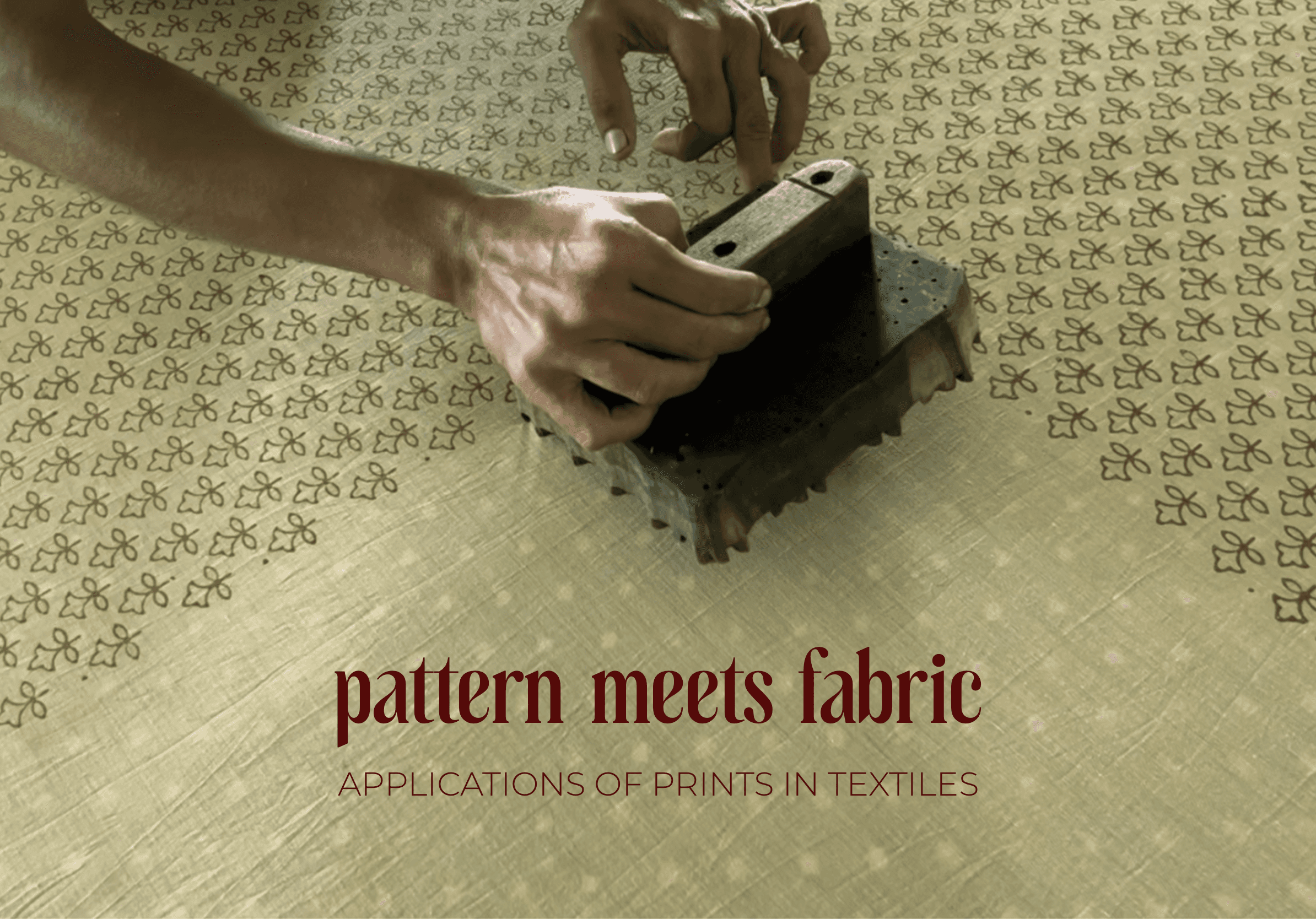
ORIGINS
Rogan art, a practice that is as meditative as it is meticulous, is one of India’s most intricate and rare textile painting traditions, originating more than 400 years ago in the Kutch region of Gujarat. The word Rogan comes from the Persian word for “oil,” a reference to the thick, castor oil-based paste used to paint the designs. This craft is believed to have arrived in India from Persia during the Mughal period, blending Middle Eastern aesthetics with local Indian motifs and storytelling. Traditionally, Rogan work was created for bridal trousseau and ceremonial garments, cherished as heirloom pieces passed through generations.
DECODING THE ART
Rogan painting is far more than decorative textile art ; it is a visual language of pattern, symmetry, and symbolism, each element rooted in centuries of tradition.
The Rogan Motifs
The motifs of Rogan art are steeped in cultural heritage and local storytelling.These motifs are not random; they carry stories of cultural identity, seasonal cycles, and community pride. Among its most iconic designs are:
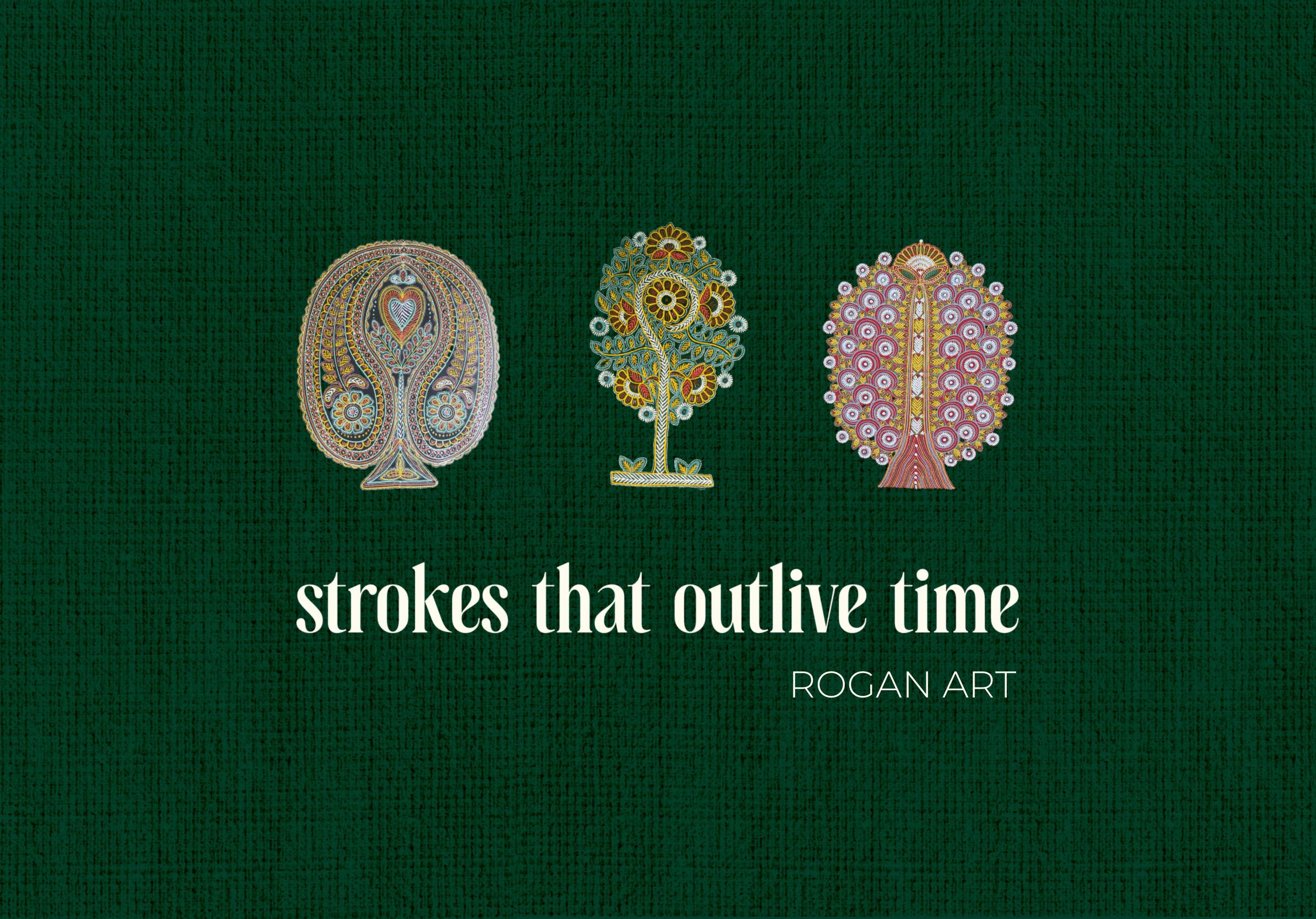
The “Tree of Life” – Perhaps the most recognized Rogan motif, this represents fertility, growth, and the interconnectedness of life. Its trunk is sturdy, its branches spread wide, and it is adorned with intricate flowers, birds, and leaves—each a symbol of prosperity and abundance.
Paisleys and Butis – Persian-inspired motifs that have been localized into vibrant, rhythmic patterns, often used for borders and fillers.
Geometric Symmetry – Fine lattices, diamond shapes, and concentric circles that represent balance and harmony.
Floral Vines and Nature Elements – Roses, lotuses, and leafy tendrils evoke the natural beauty of the Kutch landscape, with seasonal blooms often influencing the designs.
Color Palette
Rogan art is immediately recognizable by its jewel-toned palette set against deep, contrasting backgrounds. Traditionally, fabrics in dark hues like black, indigo, deep red, or dark green are chosen to make the colors pop. The pigments are bold ; bright yellows, deep reds, emerald greens, cobalt blues, and pure whites. Gold and ochre tones are often used to add warmth and richness.
The use of natural pigments gives the colors a muted yet striking quality, one that only gets richer over time. The controlled color application is as much about technical mastery as it is about aesthetic choice, since the paste is applied in a single, uninterrupted flow.
DESIGN VERSATALITY
Historically, Rogan art adorned bridal skirts (ghagras), odhanis, wall hangings, and quilts. Today, its application has expanded to stoles, scarves, cushion covers, table runners, and even framed artworks. The adaptability of its motifs and its compatibility with contemporary design sensibilities have allowed it to find a place in both heritage preservation and modern interiors.
COMMUNITY AND PRESENT DAY
For centuries, Rogan painting was a closely guarded skill, passed down through generations within the Khatri community of Nirona village in Kutch. Traditionally practiced only by men, it required immense patience and years of apprenticeship. For much of the 20th century, Rogan art teetered on the brink of extinction—its painstaking process and low commercial viability meant fewer young artisans wanted to take it up. By the late 20th century, the craft had nearly vanished, with only one surviving family keeping it alive.
However, in recent decades, awareness efforts, government initiatives, and high-profile recognition. Today, Rogan art operates in a delicate balance between tradition and adaptation. Workshops and demonstrations for tourists provide both income and awareness, while some artisans are experimenting with contemporary designs to appeal to new markets. Even so, the number of practitioners remains extremely small and authentic Rogan work, a treasure.