UNDERSTANDING PRINT IN DESIGN
Prints are the visual storytellers of textiles—they carry mood, culture, and individuality across a surface. Whether it’s the delicate rhythm of florals, the bold geometry of stripes, or the organic fluidity of hand-painted patterns, prints give fabrics their personality. Prints are not just decorative; they define a season, set trends, and connect with an audience on an emotional level.
But when we talk about “a collection” in print education, it’s not about a single beautiful print—it’s about creating a cohesive body of designs that share a unifying concept, color story, or design language. It’s about harmony, variety, and narrative flow—so that whether seen individually or together, the prints feel like part of the same world.
APPROACH
There’s no single “correct” way to build a collection. Designers approach it differently depending on their style, training, and objectives. Here are some common ways print collections come to life :
The Moodboard & Research-Led Approach :
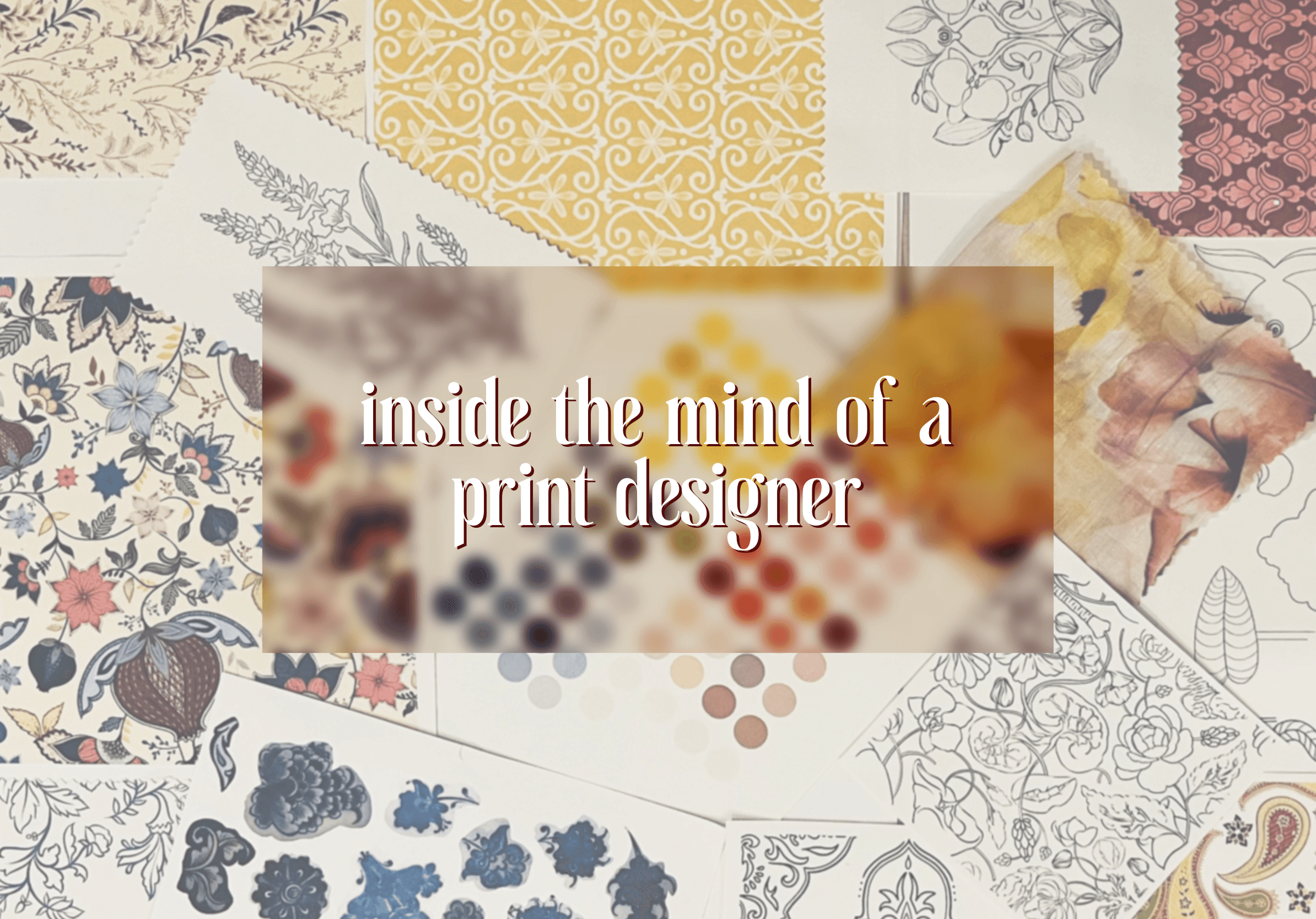
In this method, the process begins with extensive research and conceptual exploration. They compile these findings into visual collages that define the mood, color palette, textures, and forms. Followed by that, they translate the concept into motifs, patterns, and layouts. This approach ensures the collection has a strong thematic backbone and is visually and emotionally consistent. It’s widely used in high-end fashion houses, surface design studios, and academic projects where storytelling is as important as aesthetics.
The Print-First Approach :
Some designers rely on skill and instinct rather than a formalized process ; skipping deep conceptualization and directly jumping into visual creation. They might have a spontaneous idea, a set of sketches, or a few photographic references and start experimenting with motifs and layouts. The collection takes shape organically often leading to intuitively cohesive collections because the designs evolve from a single creative flow.
The Trend-Driven Approach :
Many commercial print collections are built around forecasted trends. Designers refer to trend prediction agencies, seasonal Pantone colors, and retail market research. Prints are then designed to align with what’s expected to sell in a particular season, be it tropical botanicals, retro checks, or abstract geometrics. While this approach is market-focused, it can still be creative, as designers must interpret trends in fresh ways to avoid repetition in the marketplace.
The Experimental / Technique-Led Approach :
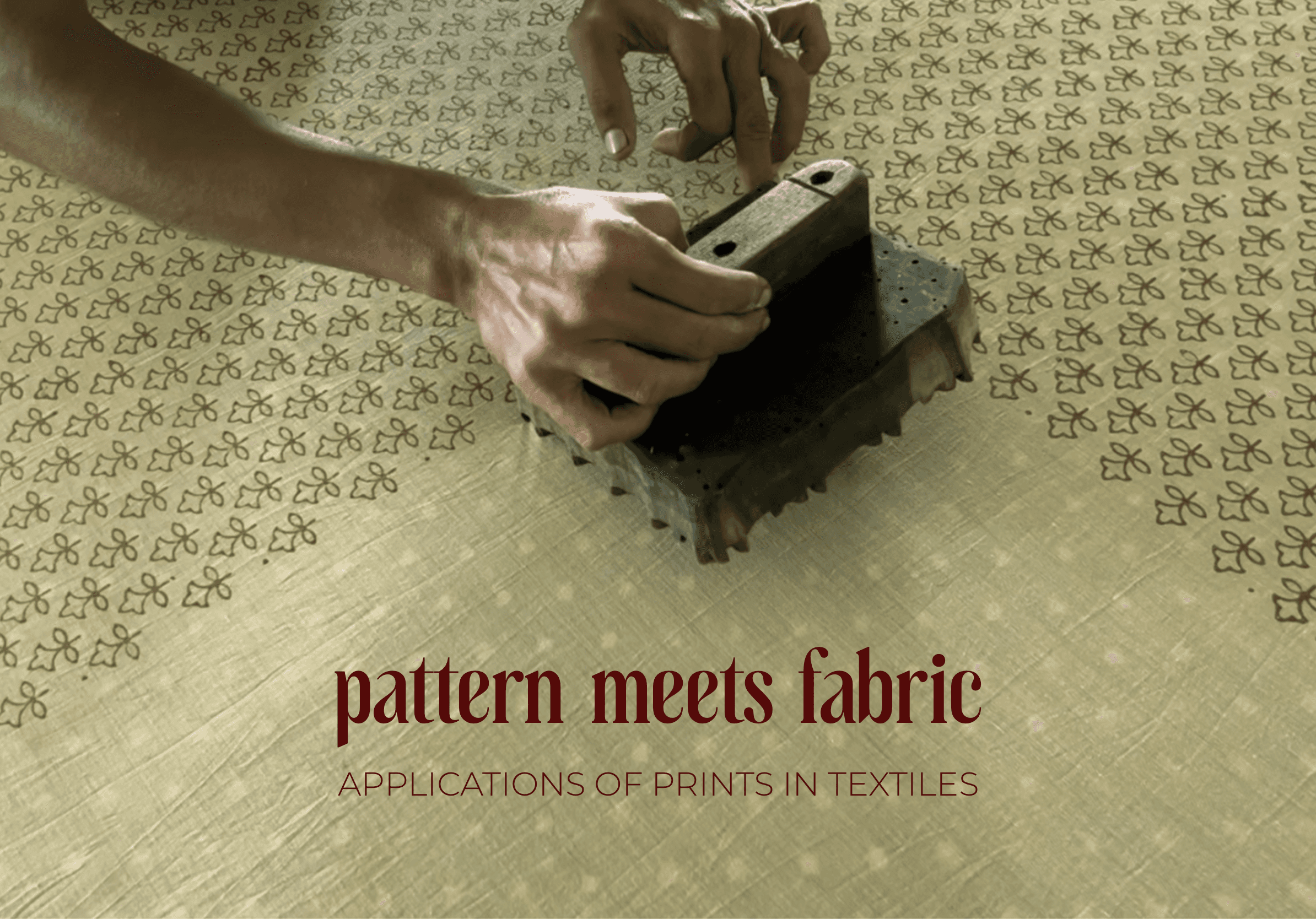
The collection is built around a single experimental technique such as block printing, shibori-inspired digital repeats, or collage-based layouts. The unifying element is not necessarily the theme but the visual identity created by the technique itself. This is often used by textile artists and studios looking to push the boundaries of printmaking, resulting in collections that stand out for their process-driven uniqueness.
DESIGN PROCESS
Making of a print collection not only follows different approaches but also design process models depending on workflow :
Linear Process :
The linear approach is step-by-step and sequential making it the most common in educational settings and large studios, where a clear workflow ensures deadlines and consistency. Initiated by locking on an inspiration, followed by research, brainstorming and designing this collection keeps the original idea intact and synced across various steps leading to a thoughtful outcome.
Circular Process :
The circular model sees the design journey as continuous and looping ; a designer can return to earlier stages at any time. For example, after creating initial motifs, they might go back to research to refine the concept or adjust colors after testing layouts. This approach encourages flexibility, allowing the collection to evolve organically while still maintaining the core idea. It enables the inclusion of a broader mindset ( consideration of material, colour, textures, surfaces, etc.) enabling the designer to think about its execution and outcomes.
Iterative Process :
An iterative process involves continuous trial and refinement. Designers produce small batches of prints, review them, make changes, and repeat the cycle. This is particularly useful for experimental work, digital printing, or collaborative projects where multiple perspectives shape the outcome. Iterative workflows often lead to richer collections because each round of feedback enhances the quality and cohesiveness of the designs.
MINDSETS AND METHODS
Beyond technical workflows, designers also differ in their mindset when building a collection. In practice, most designers blend these methods—perhaps beginning with research, then allowing spontaneity to shape certain elements. Here are a few common creative personalities in print design :
The Storyteller – Starts with a strong narrative or theme, ensuring every print contributes to the story.
The Colorist – Focuses first on the palette, building prints that harmonize chromatically.
The Motif Builder – Creates a master set of motifs first and then explores different ways of arranging them into prints.
The Improviser – Works in a free-flowing manner without rigid plans, letting the collection emerge naturally.
The Archivist – Draws from personal archives, vintage patterns, or cultural references to build a collection rich in history.
ANATOMY OF A BALANCED COLLECTION
Regardless of the approach, a good collection often has a balance making it functional for real-world application :
A hero print – the star, often complex and detailed, setting the tone.
Secondary prints – variations that complement the hero, often simpler in layout.
Blender or filler prints – small-scale, versatile patterns to tie everything together.
A unified color palette – ensuring all prints can be mixed and matched.
Consistent visual language – in terms of motif style, line quality, and mood.
Creating a print collection is both an art of vision and a science of cohesion. Across different approaches, processes and mindsets, the ultimate goal remains the same ; to produce a set of prints that are unified while allowing for variety and application. In the world of print education, learning how to make a collection is as important as the designs themselves. It teaches discipline, critical thinking, and the ability to balance personal style with functional, market-ready outcomes.