There’s something magical about textiles draped in prints. Whether it’s the lush swirls of an ornate floral on flowing silk or the geometric sharpness on crisp cotton, prints bring life, depth, and personality to fabrics. Textiles become the canvas, and prints are the stories they wear. From ancient trade routes to modern fashion runways, the combination of textiles and prints has shaped cultures, sparked economies, and defined eras in style.
In the world of fashion and interiors, textiles are not just materials; they’re messengers. When they carry prints, they speak of heritage, craft, innovation, and taste. This chapter explores the fascinating interplay between prints and textiles - their history, diversity, and global presence and why they remain one of the most powerful forms of visual expression in fabric form.
PRINTS AND TEXTILES
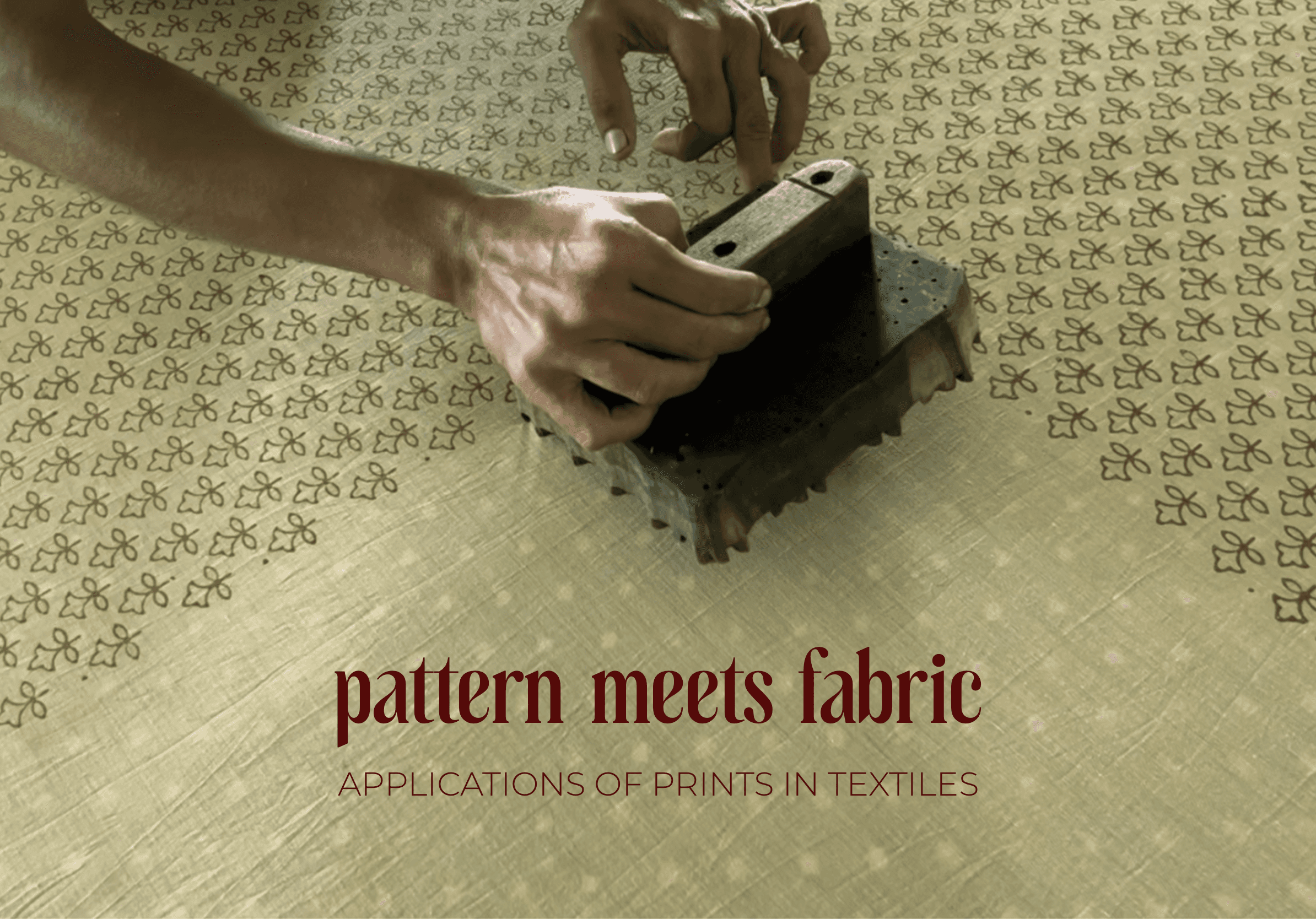
Long before digital printing or industrial weaving, artisans used natural dyes and time consuming methods to adorn fabrics with motifs. From the block-printed cottons of India that sailed across seas to Europe in the 17th century, to the intricate batiks of Indonesia, to the symbolic Adinkra patterns of West Africa , every region developed its own way of making printed textiles tell a story.
Over centuries, printed textiles became both everyday commodities and luxury goods. They were worn, traded, gifted, and even fought over. The famous “chintz wars” of the 1700s in Europe where governments banned Indian printed cottons to protect local industries are a testament to how much power these decorated fabrics held. Each culture’s printed textiles serve as visual markers of tradition, status, and occasion, becoming both personal and communal treasures.
POWER OF PRINTED TEXTILES
The beauty of prints in textiles is their versatility. Printed textiles aren’t just aesthetic treasures but they are economic engines. From cottage industries employing skilled artisans to massive factories producing printed fabrics by the kilometer, this sector sustains millions of livelihoods. In places like Rajasthan, Gujarat, and West Africa, printed textiles are major exports, keeping traditional crafts alive while meeting modern demands. In the global retail space, printed textiles also drive trends and influence purchasing patterns. A striking print can become the “must-have” of the season, selling out in days and sparking countless imitations.
PRESERVATION AND INNOVATION
One of the most fascinating things about printed textiles is their dual nature: they’re timeless and ever-changing. Ancient printing techniques still survive sometimes in their original form, sometimes adapted with modern technology. At the same time, innovations like digital printing, eco-friendly dyes, and smart textiles are pushing boundaries. This blend of heritage and innovation keeps printed textiles relevant. A hand-block printed sari can sit beside a digitally printed performance fabric, both equally valuable in their own right.
CONCLUSION
In the world of prints and their applications, textiles are the foundation—the beating heart that carries the story. Without the right textile, a print can feel lifeless; but with the perfect fabric, a print becomes unforgettable. From ancient artisan traditions to futuristic fabric technologies, the marriage of prints and textiles has shaped how we dress, decorate, and express ourselves. It’s a relationship that has evolved but never lost its essence, one where fabric is the stage, and prints are the drama.
And this is only the beginning. In the chapters ahead, we’ll explore how prints extend beyond textiles into other realms—but for now, let’s appreciate that when it comes to printed expression, textiles will always be where the story began.